
Guide
Staining Decks and Wood
What stain actually does for wood out here, how we prep and apply it, and when to put fresh finish on.
Wood is the most rewarding surface we finish and the least forgiving. Left bare in this valley, a deck goes gray in a season and starts checking not long after.
This guide covers what stain and clear coat actually do, how we prep and apply them, and how often wood out here needs fresh finish.
What stain does that paint does not
Paint sits on top of wood as a film. Stain soaks into it. That difference is why stain shows grain and why it wears differently: instead of peeling in sheets, it fades and thins from the surface down.
The pigment in stain is doing real work. It is a sunscreen. Ultraviolet light breaks down the lignin that holds wood fibers together, which is what turns bare cedar and fir silver gray, and pigment is what blocks it. That is why a clear finish alone gives the least UV protection and the most frequent maintenance.
Stains run from transparent, which shows the most grain and protects the least, through semi-transparent, semi-solid, and solid, which behaves closest to paint. More pigment means more protection and less visible grain, and picking a point on that line is the first real decision.
Decks take the worst of it
A deck is horizontal, so it holds sun all day, catches every drop of rain and snow, and never sheds water the way a wall does. Add foot traffic, and it is the hardest wood surface on any property.
Freeze-thaw is the other half of the problem. Water soaks into the top of a board, freezes overnight, expands, and lifts the wood fibers. That is why old decks feel fuzzy and splinter, and why sealing the top surface and the end grain matters so much.
We clean the deck first with a wood cleaner and a brightener rather than blasting it with a pressure washer at full force, because too much pressure carves the soft grain and leaves a wavy surface that no finish can fix.
Then we sand where it is needed, let the wood dry properly, and check moisture before any finish goes on. Staining damp wood traps water under the finish and guarantees an early failure.
Doors, trim, beams, and ceilings
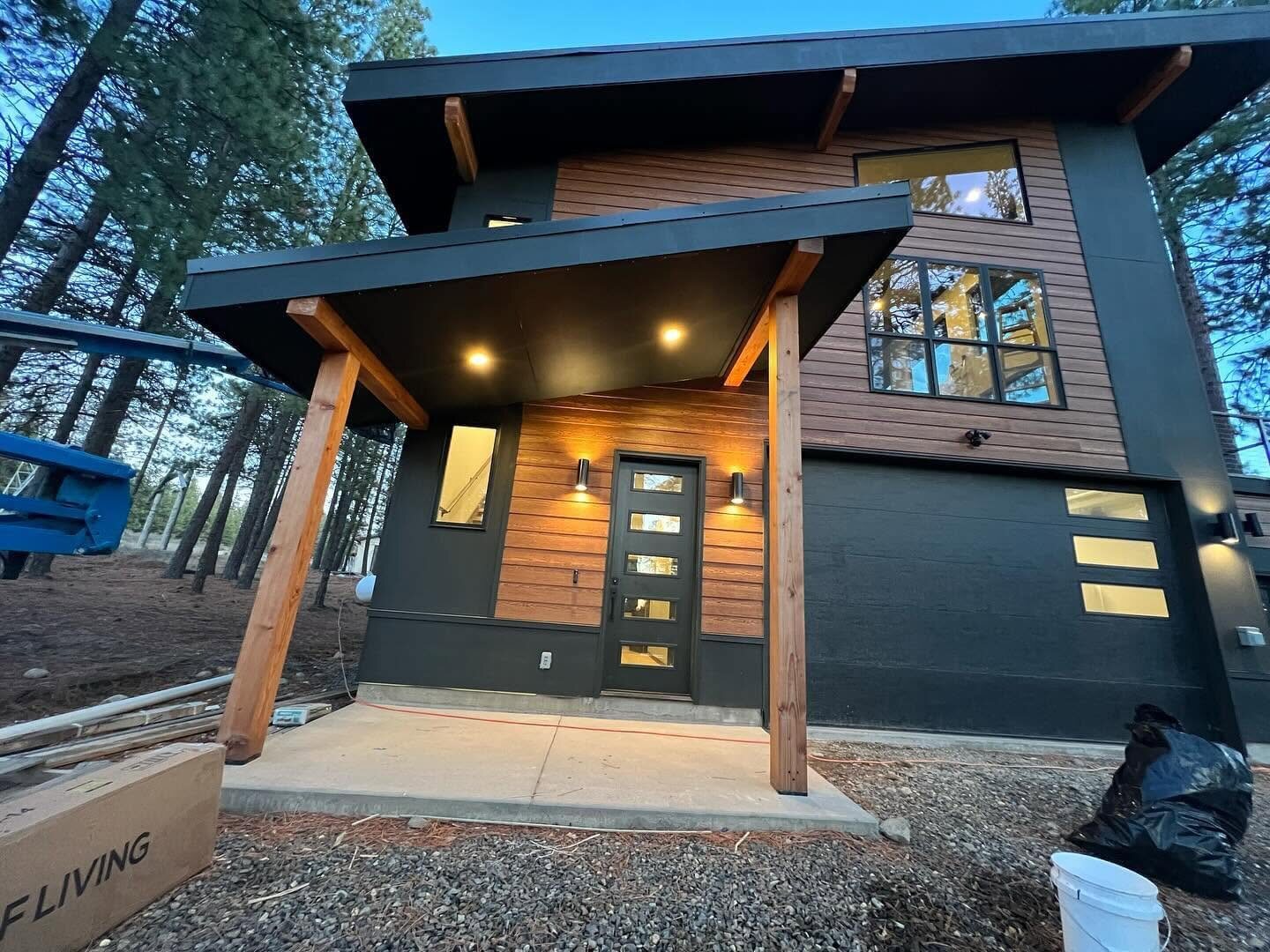
A front door in direct sun is a small surface with a hard life. We prep it carefully, build the finish in thin coats, and top it with a clear coat rated for exterior UV, since a door is the first thing anyone sees.
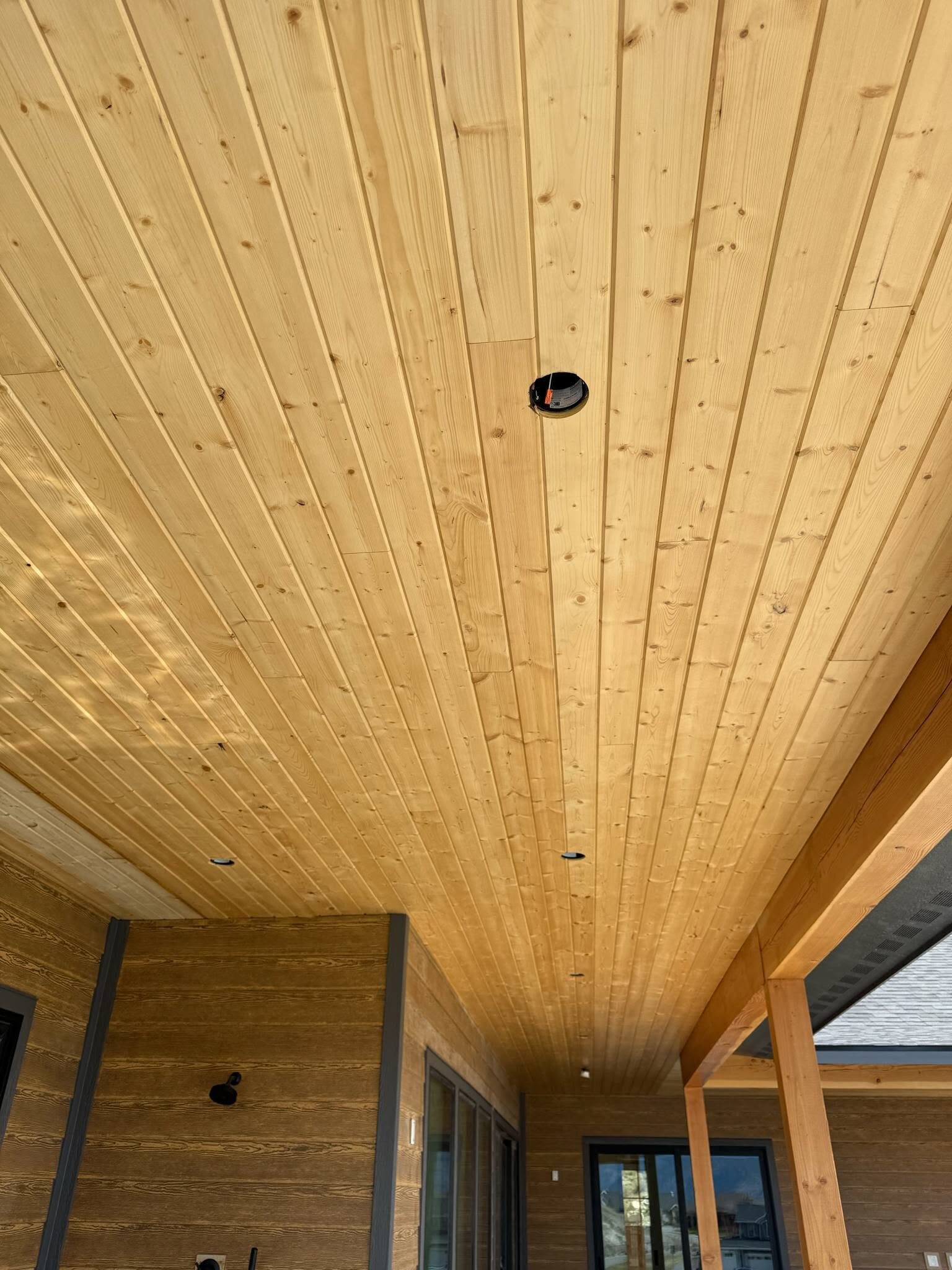
Timber, beams, and wood ceilings inside are a different job. There is no weather, so the finish is about appearance and cleanability. The work is in the prep and the masking, especially on vaulted ceilings where overspray has a long way to fall.
Interior wood usually gets a clear coat over stain in the sheen you want, from a flat that reads natural to a satin that wipes down easily. We sand between coats for a surface that feels as good as it looks.
Species changes everything. The same can of stain reads warm on fir, pink on some cedar, and muddy on pine, which is why we always put samples on your actual wood before committing.
How we apply it
Application is about even penetration, not thickness. Wood only absorbs so much, and anything that sits on top turns tacky and eventually peels.
We work board by board along the full length, keeping a wet edge so there are no lap marks where one pass overlaps a dried one. On decks, that means finishing whole boards end to end rather than stopping mid-run.
End grain drinks stain like a straw, so board ends, cut edges, and the tops of posts get extra attention. Those are where rot starts.
Temperature matters. Too hot and the stain flashes off before it soaks in, too cold and it never cures. We watch the forecast and work the shaded side, same as we do with exterior paint.
How often to recoat
Horizontal surfaces need attention far sooner than vertical ones. A deck floor in full sun is on a much shorter cycle than the railing above it or a wall of siding.
The wood will tell you. Sprinkle water on it: if it beads, the finish is still working, and if it soaks straight in and darkens the board, it is time. Fading color and a dry, chalky feel are the other signs.
Maintenance coats are far less work than a full restoration. Clean, dry, and recoat while the existing finish is still intact and the job stays simple. Let it go too long and the deck needs a full strip and sand first.
Interior wood rarely needs more than a cleaning, unless a ceiling or beam takes strong sun through a big window.
If you are not sure where your wood stands, we are glad to come take a look and tell you honestly what it needs.
Related service
Stain & Clear Coat
See our stain and clear coat work on decks, doors, beams, and ceilings.
Questions we get.
- Can you match the stain color already on my deck?
- We test samples on your actual wood first, because the same stain reads differently on different species and on wood that has already weathered.
- Do you have to strip an old finish?
- Not always. If the existing finish is still sound we can clean and recoat. If it is peeling or has failed in patches, stripping and sanding gives a finish that will actually last.
- How soon can we use the deck after staining?
- Most decks take foot traffic the day after the final coat, with furniture and grills back a day or two later once the finish has hardened.
Free written estimates · (509) 421-0717
Let's pick your colors.
Call, text, or send us a note. We respond within one business day.