Guide
Metallic Epoxy Floors, Explained
How a metallic floor is built, from the grinder to the topcoat, and how to keep it looking new.
Metallic epoxy is the floor people stop and stare at. It is the one that looks like polished marble or moving water, and it is the work our family is known for across North Central Washington.
This guide walks through how a metallic floor is actually built, from the bare slab to the final clear coat, so you know what you are looking at when we show you samples.
It starts with the slab, not the color
Concrete looks solid, but the top surface of a slab is usually a thin, weak layer of cream and curing compound. Coating straight over it is the fastest way to get a floor that peels in a year.
We diamond grind the whole slab first. Grinding opens the pores of the concrete and gives the primer somewhere to grip, and it also levels the small humps and trowel marks you never notice until light reflects off a glossy finish.
While the grinder is out, we chase cracks, grind out weak spots, and fill control joints and chips with a structural repair product. Anything that moves under a floor will eventually show through it, so this is the stage where we are the most stubborn.
We also check the slab for moisture. Concrete on grade can push water vapor up from below, and a floor coated over an active moisture problem will blister. If the readings say we need a moisture-tolerant primer, we use one.
How the marble effect actually forms
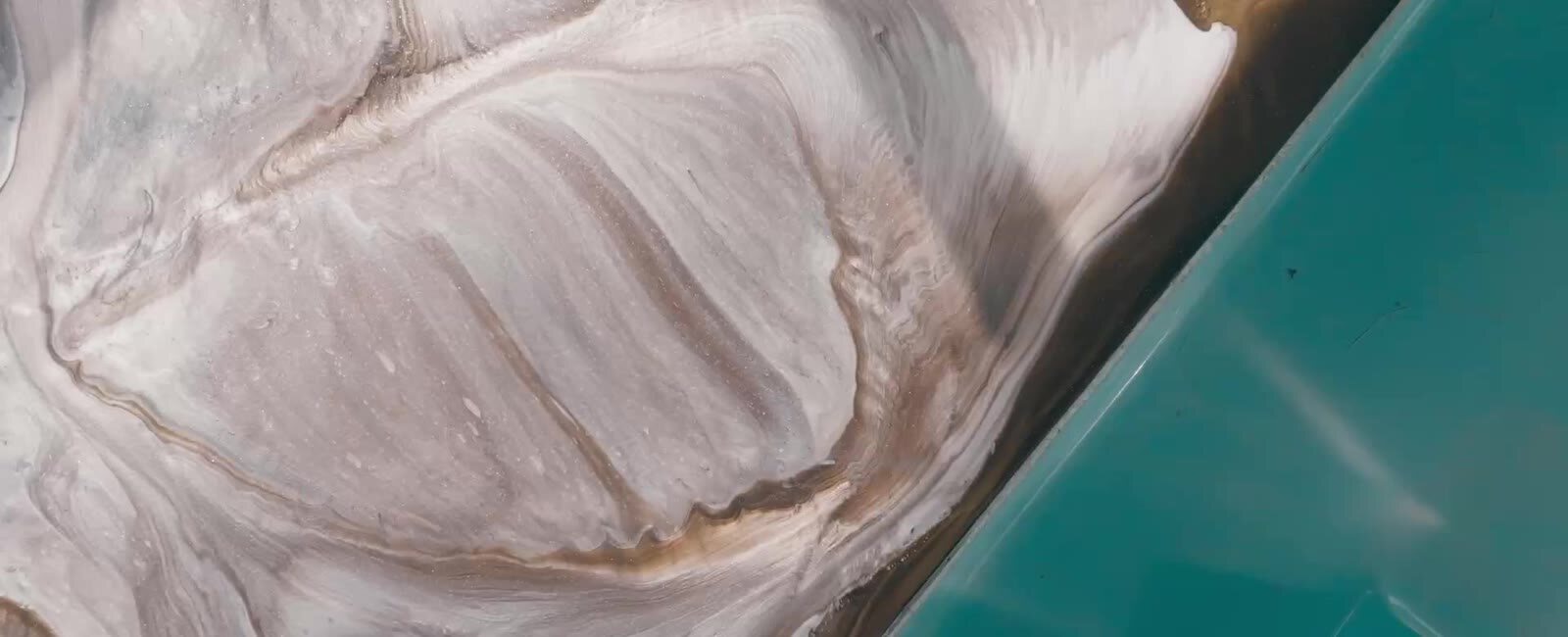
A metallic floor is not painted on. It is a pigmented epoxy base color, usually a deep one, with metallic pigments suspended in a clear resin poured over the top.
Those metallic pigments are extremely fine flakes. When the resin is spread, they move with it, and they keep moving as the resin levels and releases air. Light and dark pigment gather in different places, and that separation is what makes the veining, the cells, and the depth.
The installer controls the pattern with the tools and the timing: how the resin is spread, how it is chopped with a roller, where a solvent mist is applied to open cells, and how long it is worked before the epoxy starts to set. Two floors with identical products will never look identical, and that is the appeal.
Because the effect happens while the resin is wet, there is no undo. It is a one-shot pour, which is why experience matters more here than on almost any other finish we install.
Choosing colors and finish
Metallic pigments come in a wide range of tones: charcoal and pearl, warm bronze and copper, teal and deep blue, and soft gray for something quieter. Blends are mixed to order, so a floor can be pulled toward the cabinets, countertops, or siding you already have.
Darker bases with a lighter pigment give strong contrast and dramatic veining. Two close tones give a soft, stone-like look that reads more like polished concrete. If you want the floor to be the loudest thing in the room, we go with contrast. If you want it to sit quietly under everything else, we tighten the range.
We bring samples to the estimate so you can see them in your own light. Metallic changes completely between daylight, shop lights, and warm bulbs, and a sample sitting on your floor tells you far more than a photo on a phone.
Flake systems are the other popular route. Colored vinyl flake broadcast into the base coat gives a speckled, forgiving surface that hides dust and looks great in a working garage. Some people mix the two: metallic in the showroom side, flake in the work bay.
Topcoats, durability, and care
The metallic layer is beautiful, but the clear topcoat is what takes the abuse. We finish with a high-build clear that resists scuffing, hot tire pickup, and the road salt that rides in on a truck all winter.
Gloss is the default because it shows off the depth in the metallic. A satin topcoat is available when a floor gets full sun through a shop door or when a business wants less glare.
Care is simple. Sweep or dust mop the grit, since sand is what dulls a floor over time, and wash with a mild cleaner and water. Skip anything with harsh solvents or heavy citrus. Put felt pads under anything that gets dragged, and use a mat under jack stands and floor jacks.
Cure time is worth planning around. Foot traffic is usually fine the day after the final coat, and vehicles come back after the full cure window. We give you both dates in writing before we start so nothing gets rushed.
Where these floors work best
Garages are the classic spot. A metallic floor turns the least finished room in the house into the one people ask about, and it is far easier to clean than bare concrete.
Basements and bonus rooms work well because the floor stays out of direct sun and the finish reads like stone. Shops and detached buildings take the flake and solid systems well when the work is heavy.
On the commercial side, we install metallic floors in showrooms, retail spaces, salons, breweries, and offices. It is a finished floor that takes cart traffic, holds up to daily mopping, and looks like something far more expensive to build.
If a space has concrete and gets looked at, it is a candidate. Come see the samples and we will tell you honestly whether metallic, flake, or a solid system is the right call for the room.
Related service
Epoxy Flooring
See the finishes we install and the floors we have poured around the valley.
Questions we get.
- How long does a metallic epoxy install take?
- Most garage-sized floors run a few days: grinding and prep first, then the base and metallic pour, then the clear topcoat with cure time between steps. We hand you the day-by-day schedule with your written estimate.
- Will a metallic floor be slippery?
- A gloss floor is smooth, so we can add a fine anti-slip additive to the topcoat in entryways, shops, or anywhere the floor gets wet. It blends into the finish and you barely see it.
- Can metallic epoxy go over an existing coating?
- Sometimes, but not blind. We test the existing coating for bond and grind it off when it fails, because a new floor is only as sound as what it is stuck to.
Free written estimates · (509) 421-0717
Let's pick your colors.
Call, text, or send us a note. We respond within one business day.